
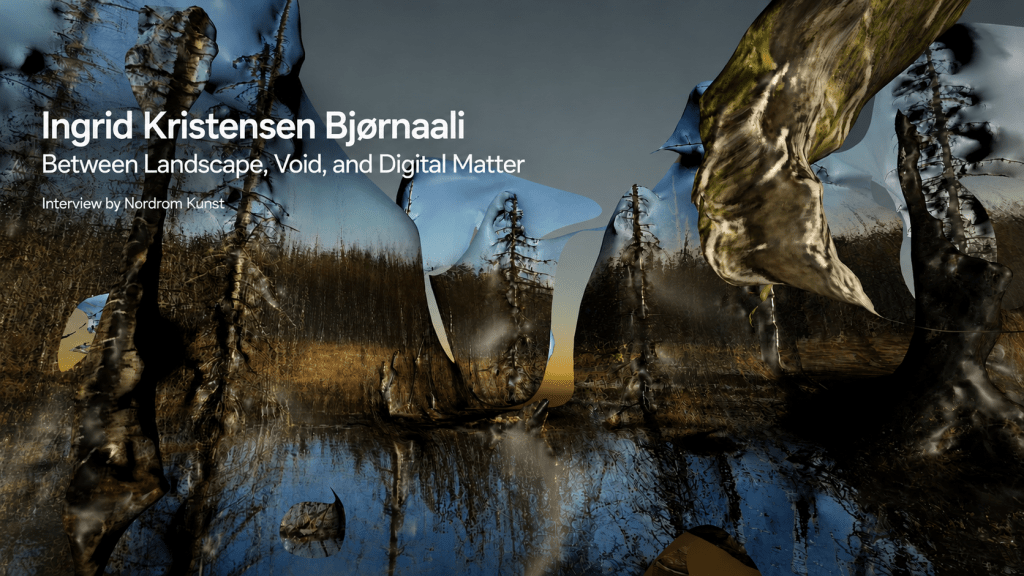
Between Landscape, Void, and Digital Matter
Interview by Nordrom Kunst
Norwegian artist Ingrid Kristensen Bjørnaali works at the intersection of ecology, moving image, sound, and digital scanning technologies. Through photogrammetry, field recordings, and fragmented visual environments, her practice explores how contemporary technologies alter our perception of landscapes and living systems.
Rather than documenting nature as a stable reality, Bjørnaali transforms physical environments into unstable digital territories — spaces where matter dissolves, borders collapse, and ecosystems appear simultaneously familiar and alien. Her works often emerge from close observation of Nordic terrains, peatlands, volcanic surfaces, and fragile biotopes, combining scientific processes with poetic abstraction.
For Nordrom Kunst, we spoke with the artist about digital mediation, landscape perception, ecological estrangement, and the complex relationship between technology and the natural world.
Nordrom Kunst
In your work, nature is never simply documented but passes through scanning, mediation, and digital transformation. What do you feel is gained when a landscape is no longer seen directly, but through the imperfect language of technology?
Ingrid Kristensen Bjørnaali
Nature experienced through technology is always fundamentally different from the physical experience of a landscape. What interests me is precisely this lack of objectivity, the way digital tools distort, simplify, and reconstruct reality.
Over time, I became interested in low-fi photogrammetry tools and in deliberately misusing scanning technologies rather than following their intended logic. Together with my partner, I even developed a custom photogrammetry software that keeps the parameters more open and less adapted to an object-oriented, commodified way of seeing.
Digital systems operate through binary structures: presence or absence, mesh or void, matter or deletion. Wherever the software receives enough visual information, it creates form. Where information is missing, it generates emptiness. Unlike physical landscapes, there are no smooth transitions.
In these scans, the borders between trees, air, water, and terrain often collapse or become artificially reconstructed. By exposing these failures and ruptures, I hope to reveal the actual interconnectedness of ecosystems, something the digital model itself cannot fully contain.
A peat bog, for example, seen through this lens can suddenly appear unfamiliar, almost extraterrestrial: slick, hollow, and unstable. That estrangement interests me. Perhaps abstraction allows us to encounter landscapes again as if seeing them for the first time.
For me, landscapes are never simply scenery. They are living biotopes, inseparable from the species that inhabit them.
Nordrom Kunst
Many of your works exist in a space between observation and distortion, where the image still originates from a real place but no longer behaves like something stable or recognizable. Are you interested in that moment when the natural world begins to feel slightly strange or unreachable?
Ingrid Kristensen Bjørnaali
Yes, especially when digital scans are combined with sound recordings and analogue photography from the same site. I’m fascinated by how one single place can generate completely different emotional and spatial experiences depending on the medium used to capture it.
Photogrammetry itself has historical links to satellite mapping and systems of territorial observation. These perspectives are often associated with colonial ways of mapping land, distant, detached, and presented as objective or scientific.
My own approach tries to move in the opposite direction. Instead of scanning vast territories from above, I work very close to the ground, focusing on small areas and enlarging them. It becomes a more intimate way of observing landscapes.
Sound also plays an important role in this process. In Extra Terrestriality, I combined field recordings with manipulated sounds created from physical materials connected to the site itself: water filtered through lava rock, the sound of asphalt being flattened, and even my own voice attempting to imitate tectonic friction.
These layered materials allow the landscape to become unstable — suspended somewhere between reality, memory, and fiction.
Nordrom Kunst
Your practice seems deeply connected to ecosystems and fragile environments, yet the works never feel purely documentary. Do you see your artistic process as a way of creating emotional proximity to places that are often overlooked or difficult to fully perceive?
Ingrid Kristensen Bjørnaali
I think so. Many ecological systems are incredibly difficult to truly comprehend because they exist across multiple temporalities and scales simultaneously.
Technology can record fragments of these environments, but it also simplifies them. That tension is central to my work. I’m interested in the gap between the complexity of living systems and the reductive logic of digital representation.
At the same time, abstraction can create new forms of attention. When landscapes become partially unfamiliar, viewers may spend more time observing them carefully rather than consuming them immediately as recognizable imagery.
I’m particularly interested in peatlands and fragile Nordic ecosystems because they contain immense ecological histories while often remaining visually understated or culturally overlooked. Through digital mediation, these places can temporarily appear strange, unstable, or even alien — and perhaps that shift in perception can create another kind of emotional connection.
Selected Works
Extra Terrestriality
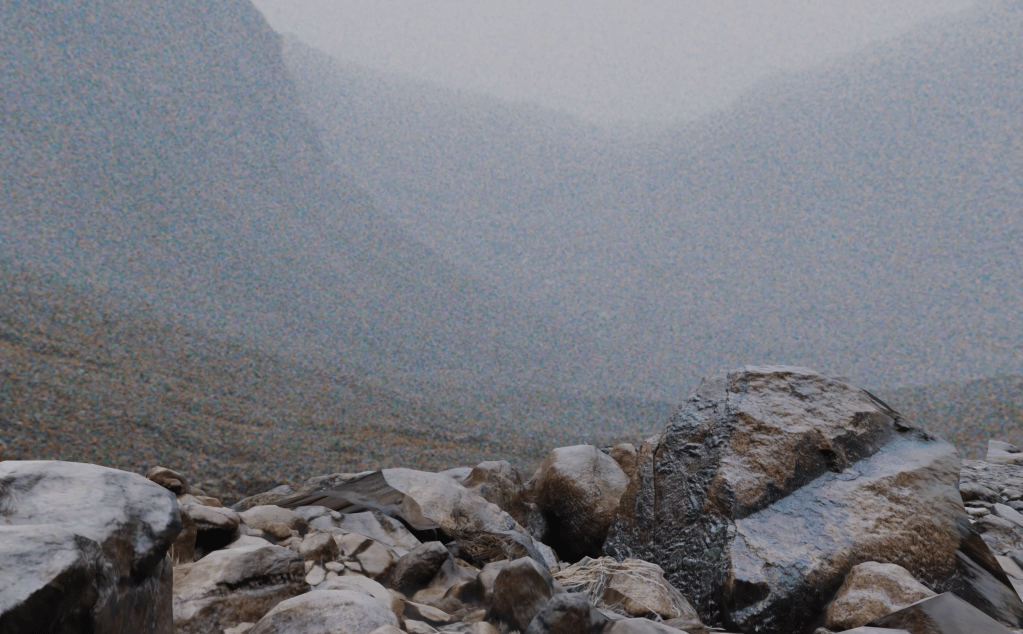
Video work by Ingrid Kristensen Bjørnaali.
Courtesy of the artist.
A multimedia work combining photogrammetry, field recordings, manipulated sound environments, and volcanic material references. The project explores geological transformation, ecological perception, and the instability of digitally reconstructed landscapes.
Land Bodies, Decomposing Mass
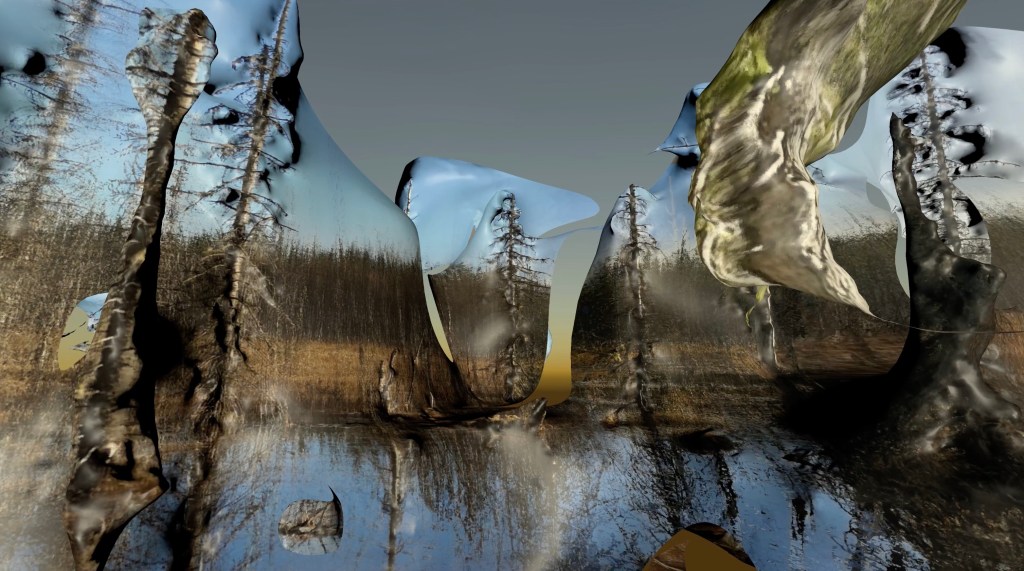
Collaborative video work by Ingrid Kristensen Bjørnaali, Fabian Lanzmaier and Maria Simmons.
Courtesy of the artists.
An investigation into landscape fragmentation and material dissolution through digital scanning technologies and expanded moving image practices.
To See Without Man
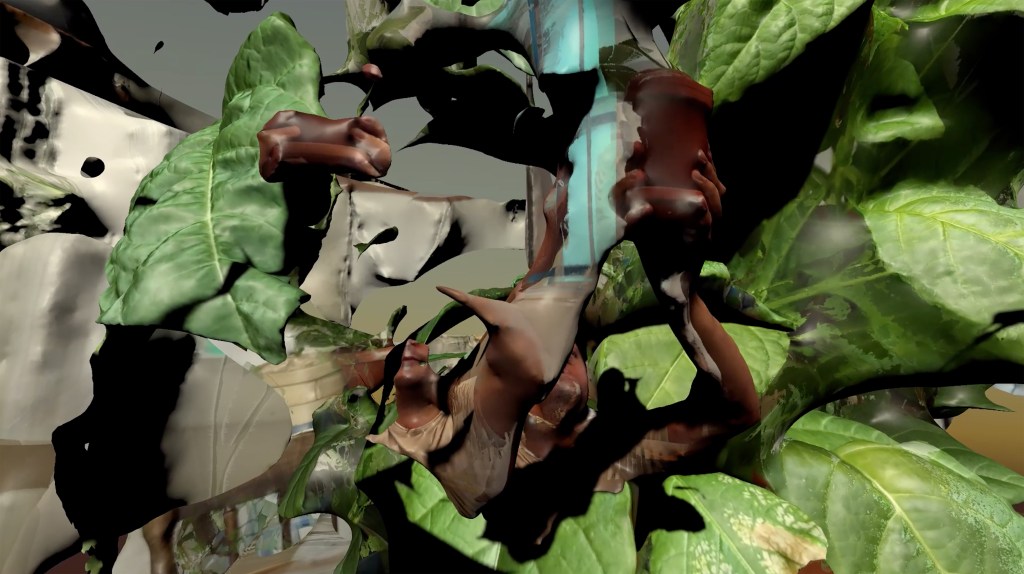
Courtesy of the artists.
A reflection on non-human perspectives, environmental observation, and the limits of technologically mediated vision.
“Landscapes are never simply scenery. They are living biotopes.”
About the Artist
Ingrid Kristensen Bjørnaali is a Norwegian artist working across moving image, sound, installation, and digital scanning technologies. Her practice examines ecological systems, mediated perception, and the relationship between technology, landscape, and environmental memory through experimental visual and sonic environments.
More information about Ingrid works can be found on her website: ingridbjornaali.com
 Nordrom Kunst