
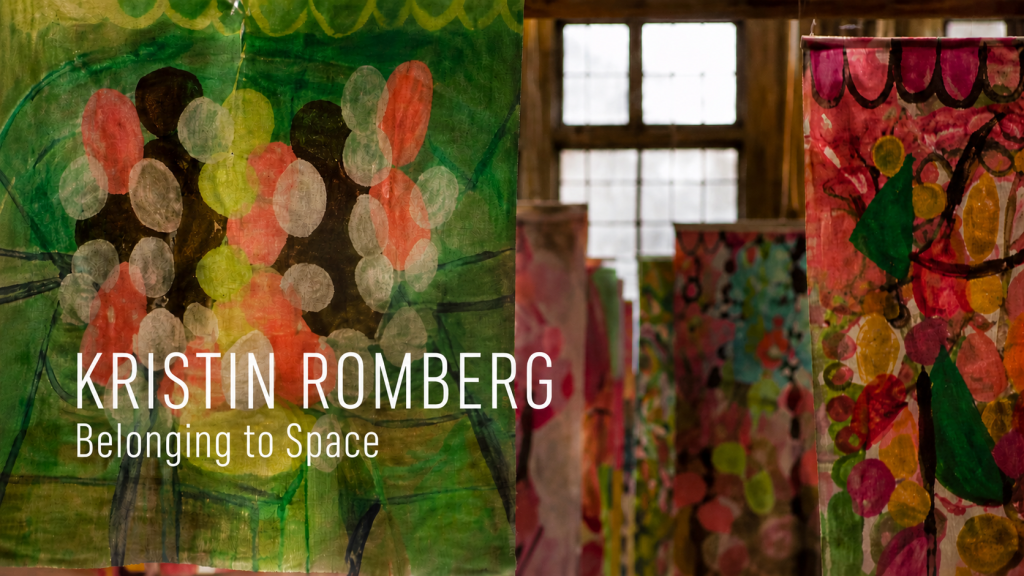
Kristin Romberg in Conversation with Nordrom Kunst
There are artistic practices that remain confined within the surface of the image, and others that slowly expand into something more atmospheric, spatial and bodily. The work of Norwegian artist Kristin Romberg belongs to this second condition, a practice where painting moves beyond representation and begins to function almost as an environment, a perceptual situation shaped by movement, materiality, gravity and physical presence.
Working between large industrial spaces, Northern Norwegian landscapes and international residencies, Romberg develops immersive installations where raw canvas, transparency, scale and suspended forms create fragile tensions between body and space. Her paintings are not static objects to be observed from a distance, but physical presences that invite the viewer into a slower and more sensorial experience of perception.
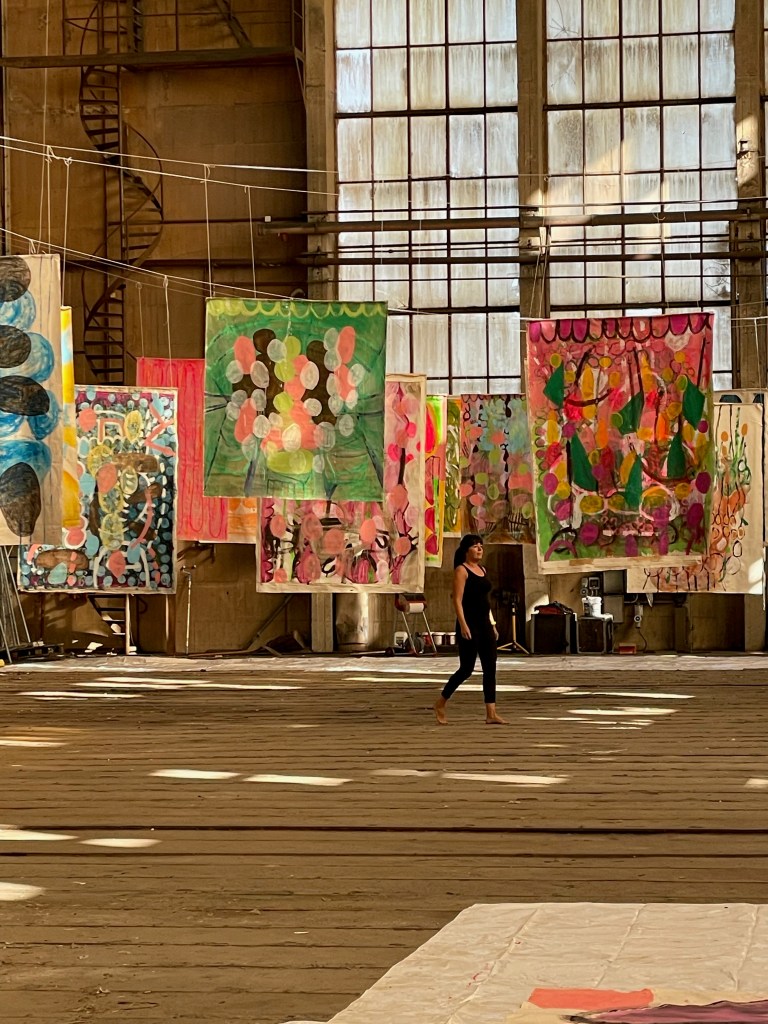
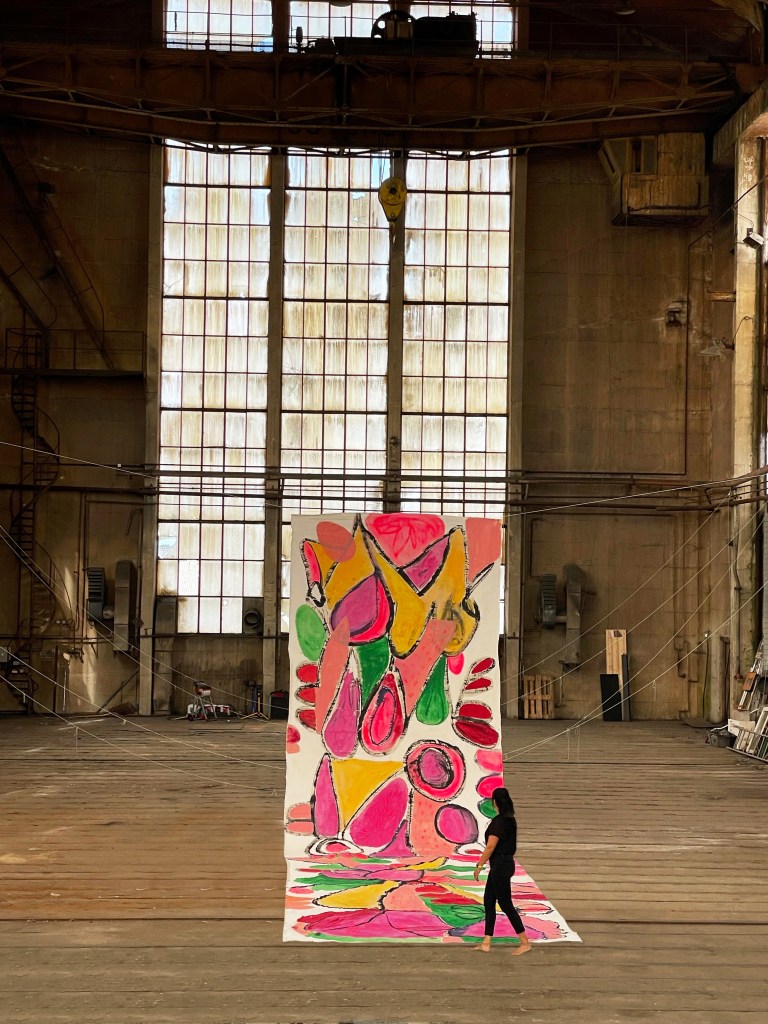
Within projects such as BELONG, painting becomes spatial, almost architectural — suspended surfaces that move with air, light and human presence, creating environments that oscillate between intimacy and monumentality. At the same time, her practice remains deeply connected to questions of vulnerability, ecology, tactility and embodied experience in an increasingly digitalised visual culture.
For Nordrom Kunst, we spoke with Kristin Romberg about materiality, Northern landscapes, bodily perception, fragile ecosystems and the possibility of painting as a living spatial encounter.
Nordrom Kunst
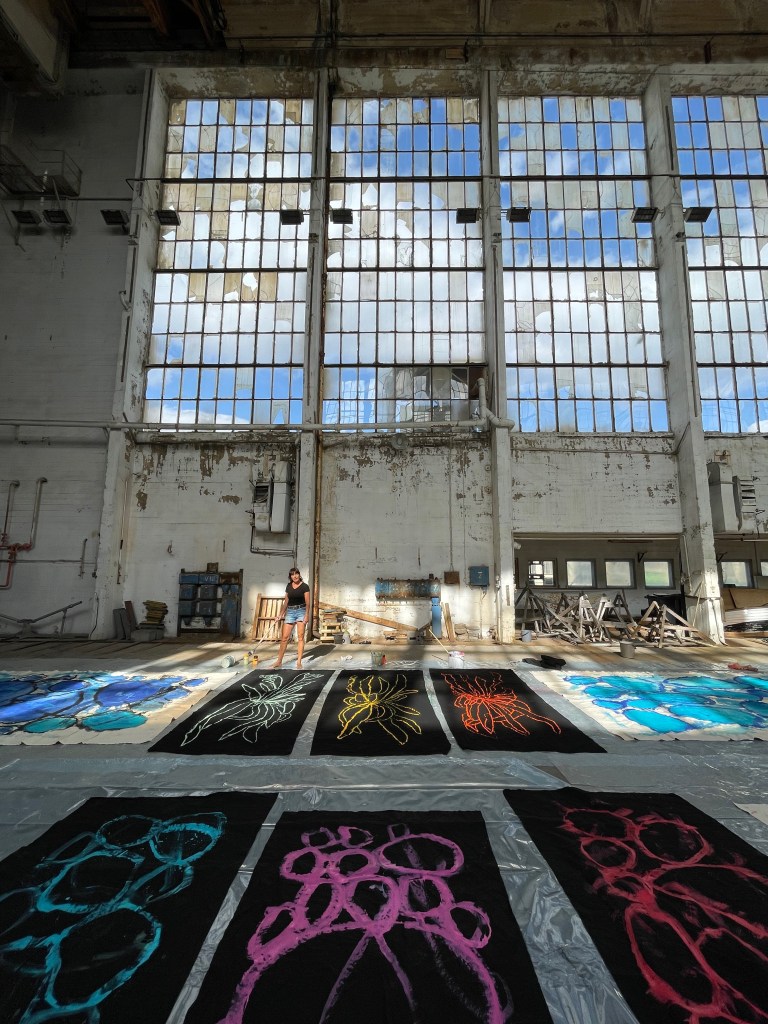
In several of your projects, the paintings seem to move beyond the wall and begin interacting directly with architecture and physical space. At what point, for you, does a painting stop functioning as an image and begin becoming an environment or a bodily experience for the viewer?
Kristin romberg
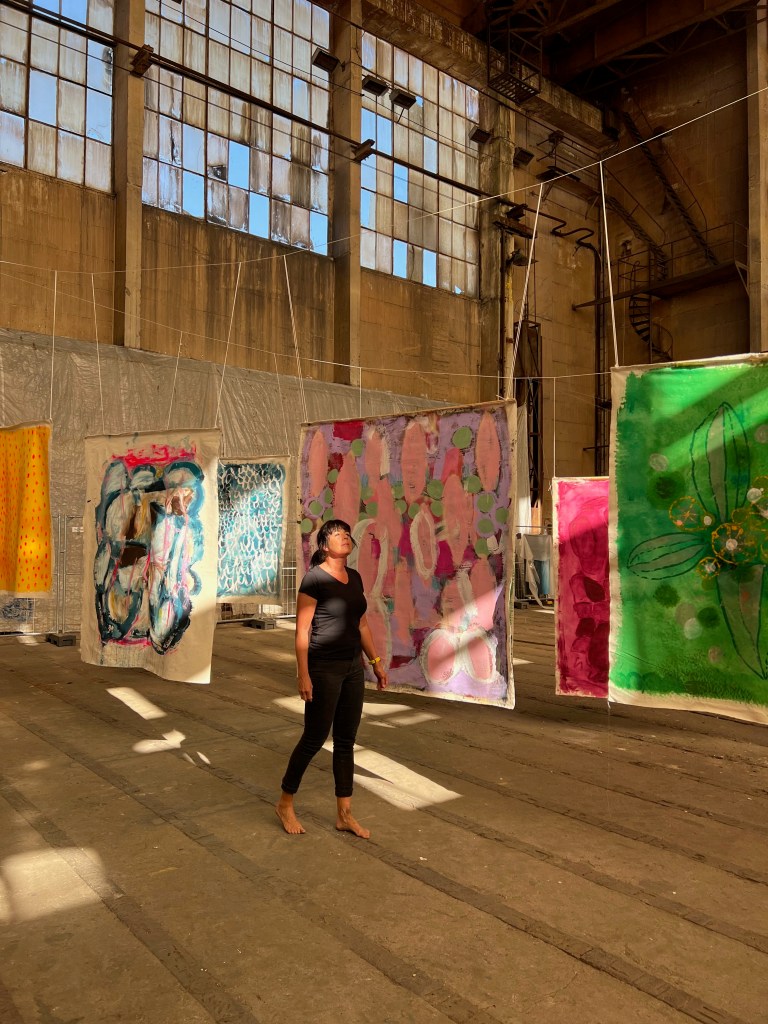
For me, painting stops being only an image the moment the body becomes involved. I have always been interested in how a painting can be experienced physically, not only visually. When the works grow larger, leave the stretcher, hang freely in space, or begin interacting with architecture, they become something the viewer moves through rather than simply looks at.
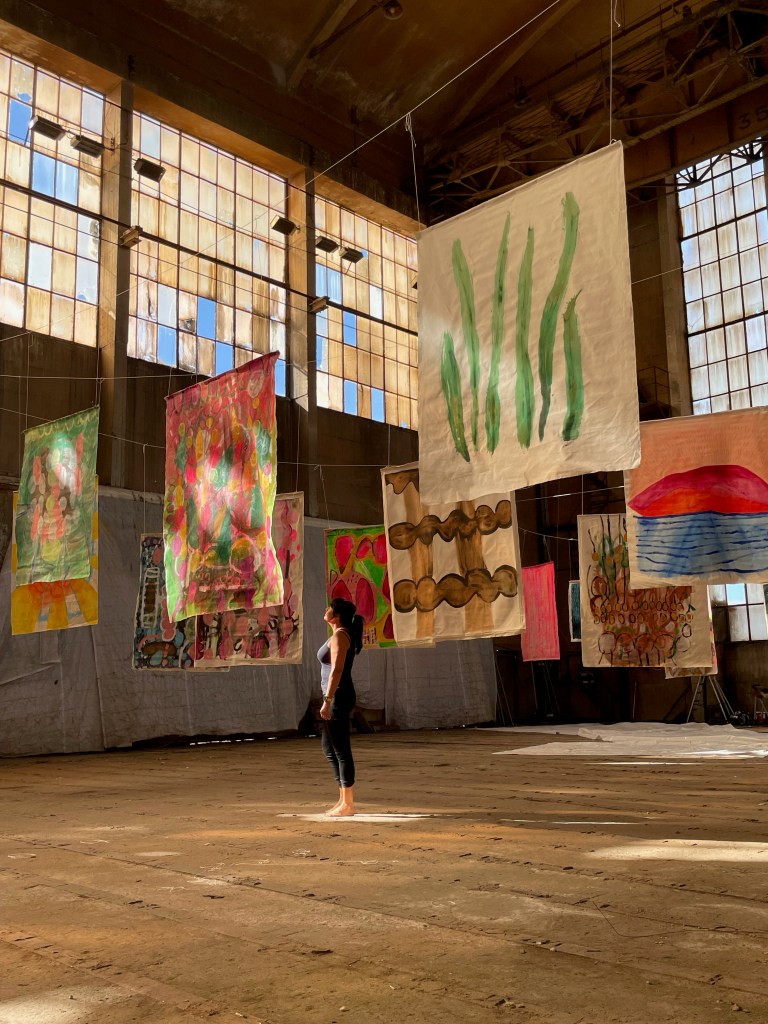
I think this comes from a desire to create presence rather than representation. I want the viewer to slow down, sense scale, gravity, texture, movement, and even vulnerability. The hanging canvases move slightly with air and with people passing by, and that creates a living situation where the work is never completely fixed. In projects like BELONG, the paintings almost become a landscape or an emotional space that the viewer enters with their whole body. The traces left by touch and movement also become part of the work itself.
I am also very interested in what happens on the backside of the paintings. Because I work on raw canvas with a lot of water and transparent layers, the colour often penetrates through the fabric. Light passes through the material differently, and sometimes the image almost glows from the other side. The backside becomes another version of the painting, more fragile and quieter, but equally important to me. It adds another layer of perception and reminds us that a painting is also an object and a physical presence in space, not only a surface or an image.
For me, painting is not only about creating an image. It is about creating an experience, a space for reflection, emotion and bodily awareness.
Nordrom Kunst
Your practice appears deeply connected both to large industrial spaces and to the Northern Norwegian landscape. We are interested in how these very different environments influence the emotional and physical structure of your works. How do territory, scale, silence, weather and surrounding atmosphere shape the way you paint and construct space within your practice?
Kristin Romberg
The environments I work in shape my paintings profoundly, both emotionally and physically. I actually work from four different places on a regular basis, in addition to all my travels and residencies abroad. Each place affects the work differently and creates its own rhythm, atmosphere and physical possibilities.
In Fredrikstad, I have a smaller studio where I work during winter because it is warm and intimate. I also work in a large industrial project space where I can install works, experiment freely and create paintings on a much larger scale. These industrial surroundings give me physical freedom. I can move around the canvases, work on the floor, use large amounts of water, and allow gravity, movement and the body itself to become part of the process.
I also work in Lofoten, surrounded by mountains, sea, silence and extreme weather. The Northern Norwegian landscape influences me deeply. The shifting light, the long horizons, the cold air and the feeling of being very close to nature affect both my palette and my emotional state. The works become calmer in some ways, more open, more connected to atmosphere and space. I often feel that the paintings made there could never have been created anywhere else.
Travel also plays an important role in my practice. Working in different countries and landscapes changes my energy and perspective. New surroundings open something up in me and challenge my habits and ways of seeing.
Nature is deeply connected to my practice, not as something decorative, but as something existential. I see myself as part of nature, and many of my works reflect both beauty and fragility, especially in connection with questions about climate, insects and the loss of ecosystems.
Nordrom Kunst
Contemporary art today is often experienced mainly through screens and digital documentation, while your work seems strongly rooted in materiality, tactility, movement and direct sensory perception. What role do you think physical presence and embodied experience still have within contemporary painting today? And are there any upcoming projects or future directions you can already share with our readers?
Kristin rOMBERG
I think physical presence has become even more important today precisely because so much art is experienced through screens. Digital images flatten things. They cannot fully communicate scale, materiality, surface, movement, smell, silence or the emotional experience of standing inside a work.
Painting still has the ability to create direct sensory encounters. A large painting affects the body differently than a small image on a phone. Texture, transparency, gravity, rhythm and even the energy of the gestures become something you experience physically. That embodied encounter is very important to me.
I also think people long for tactile and real experiences more than ever. We spend so much time in digital spaces that physical presence becomes almost radical. I want my work to invite people back into their senses and into a slower way of experiencing.
This has also led me into teaching and collaborative projects. I recently started artist retreats and workshops in Italy that are very much about exactly this: slowing down, being present, working with the hands, trusting intuition, and reconnecting with materiality and the body through painting and drawing.
At the same time, I am involved in two larger drawing projects for young people that focus on presence, hand movement and the connection between the brain and the hand. The projects encourage young people to express emotions through drawing, gesture and line rather than through words or screens. I think this kind of physical creativity is becoming increasingly important today.
At the moment, I am continuing to develop my installation-based project BELONG, where painting becomes immersive and spatial, and where viewers are invited to move through hanging works almost like walking through a forest. I am also exploring more fragile materials, paper works and new ways of combining painting, movement and space. Alongside this, I continue my long-term project Visual Diary, where I have created one small painting every single day since 2013. That daily practice remains the foundation and research space for everything else I do.
Editorial Credits
All images courtesy of Kristin Romberg.
Interview conducted by Nordrom Kunst.
For more information about Kristin Romberg follow her on Instagram @kristinromberg
 Nordrom Kunst