
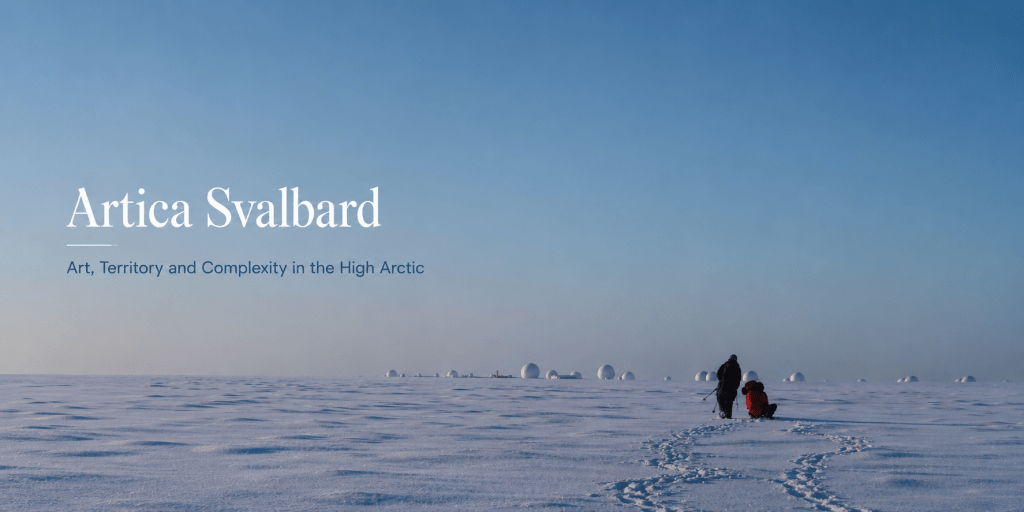
Art, Territory and Complexity in the High Arctic
Located in Longyearbyen, within the fragile and contradictory geography of Svalbard, Artica Svalbard has become one of the most significant independent cultural platforms operating in the High Arctic today. Through residencies, publications, field-based research and long-term collaborations between artists, scientists and local communities, Artica challenges simplified representations of the Arctic and instead approaches the North as a living territory shaped by environmental transformation, geopolitical tension, migration, memory and everyday life.
In this conversation with Nordrom Kunst, Artica reflects on artistic practice in Svalbard, the complexities of Arctic representation, and the slow processes through which territory itself becomes part of artistic experience.
Nordrom Kunst:
Artica Svalbard exists within a territory that today embodies multiple realities simultaneously: scientific observation, climate transformation, tourism, geopolitical attention and fragile local community life.
How does this unique condition influence the way Artica approaches contemporary artistic practice and cultural production in the High Arctic?
Artica Svalbard:
Artica’s approach is shaped by the understanding that culture on Svalbard cannot exist in isolation from the wider realities of life in the Arctic. Questions of climate change, geopolitics, migration, tourism, extraction, science and community life are not abstract themes here; they are lived experiences that intersect in everyday life.
Rather than seeing art as separate from these conditions, we understand cultural practice as a way of creating space for dialogue, reflection and new perspectives. This is why our programme extends beyond residencies to include public debates, writing commissions, lectures and collaborations between artists, researchers and the local community.
Working on Svalbard also requires slowness and responsiveness. We encourage longer stays and sustained engagement because meaningful work often emerges through time spent listening, observing and participating in place, rather than responding only to the symbolic image of the Arctic.
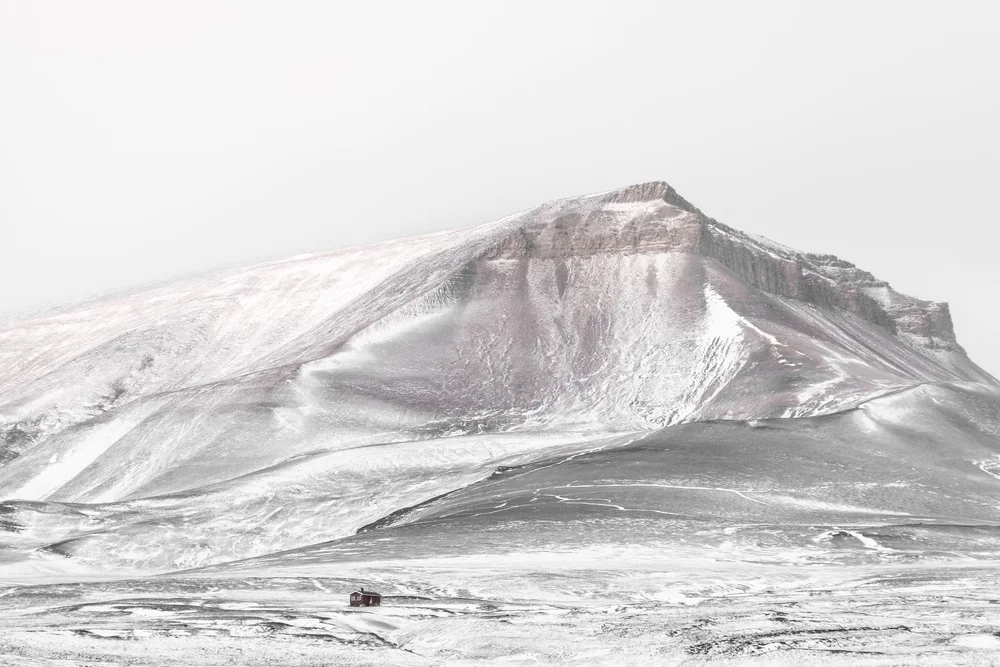
This approach can be seen in projects such as Tarandus, our field-based residency developed in collaboration with Samantha Dwinnell, ecologist and conservationist at UNIS, where artists are embedded within ongoing ecological fieldwork studying Svalbard reindeer. Another example is artist Lilian Kroth’s project Seeing Ice Like a Satellite, developed during her residency at Artica, which explored how Earth observation technologies shape contemporary understandings of glaciers and environmental change.
For us, contemporary artistic practice becomes a way of navigating complexity, creating space where multiple perspectives can coexist and where difficult questions about the future of the Arctic can be explored collectively.
Nordrom Kunst:
In recent years, the Arctic has increasingly become a visual and symbolic landscape consumed through media, tourism and global imagination.
How does Artica Svalbard navigate the tension between preserving the complexity of the territory and avoiding simplified or romanticised narratives of the North?
Artica Svalbard:
This question is closely connected to Artica’s core vision: to use art and culture to raise awareness of the unique challenges in the Arctic, spread knowledge and inspire change. We support artists, writers and researchers whose practices engage with contemporary issues affecting the region — from environmental change and extractive industries to geopolitics, migration and everyday community life.
We work hard to amplify the lived realities and complexities of Svalbard in everything we do, from the day-to-day conversations we have with our visiting residents to the projects, talks and workshops we host. We often see that people arrive in Svalbard carrying certain expectations of the Arctic: ideas shaped by media, tourism or imagination. These assumptions slowly shift as they begin to meet people, experience daily life, and encounter the contradictions of the place. Svalbard is simultaneously beautiful and industrial, remote and globally connected, transient and deeply rooted. By creating space for sustained engagement rather than quick consumption, we hope to move beyond simplified narratives and towards a more nuanced understanding of the North.
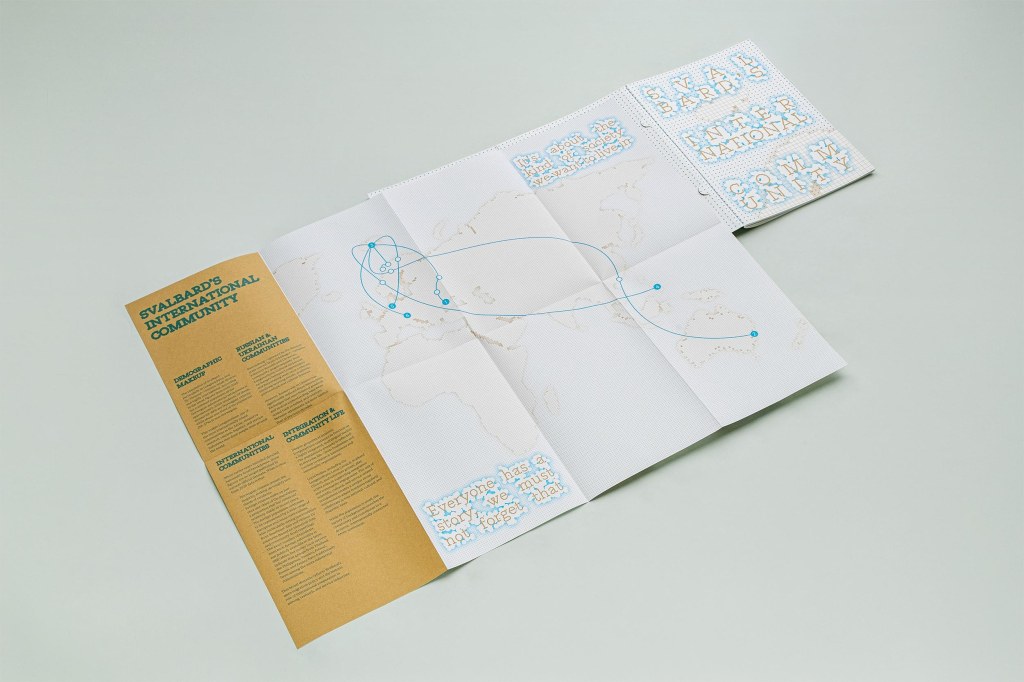
One example is Artica Writings 2024, a commissioned publication centred around conversations with international residents living on Svalbard. The texts explored questions of belonging, bureaucracy, identity and everyday life — themes often absent from external representations of the Arctic. Projects such as these seek to foreground lived experience over spectacle, and to share perspectives from multiple voices.
Nordrom Kunst:
Working in such a remote and extreme environment inevitably transforms the perception of time, isolation, collaboration and human relationships.
From your perspective, how do artists typically respond to the experience of living and working in Svalbard, and how does the territory itself become part of the creative process?
Artica Svalbard:
It often takes a week or two for residents to move beyond the initial adrenaline and sensory intensity of arriving on Svalbard. The first encounter can be overwhelming. You arrive expecting wilderness and instead encounter an industrial settlement: shipping containers, old cars, snowmobiles, mining infrastructure, hotels and bars sitting within a dramatic Arctic landscape.
For many, there is a gradual shift from observation to participation. People begin to establish routines, working in the studio, joining community events, going on evening hikes with new friends. Longyearbyen slowly becomes temporary home.
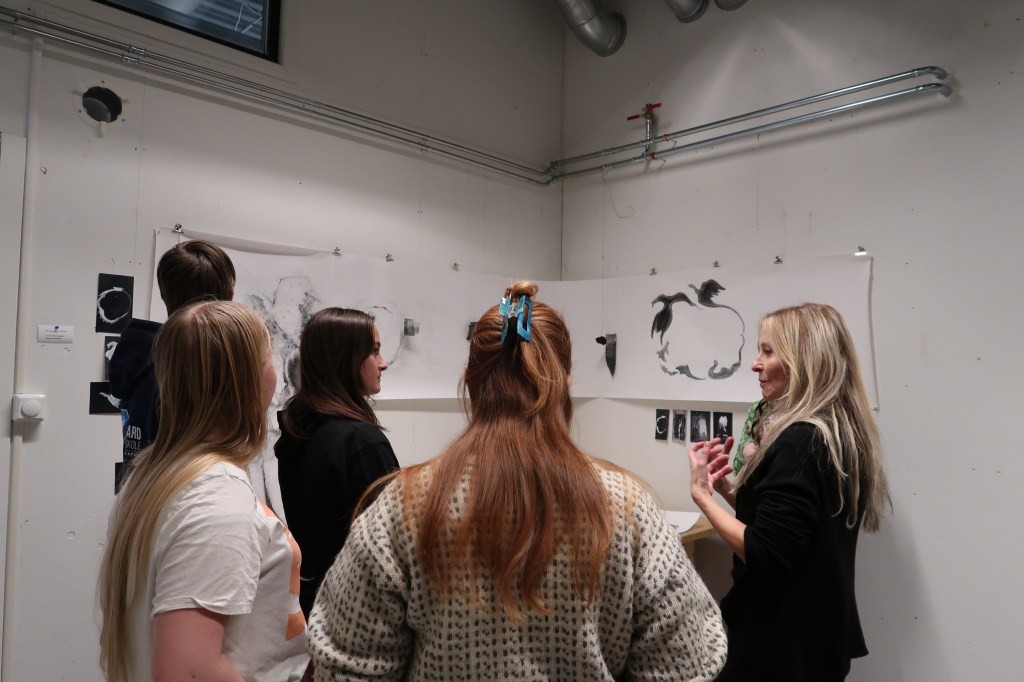
The most meaningful creative responses rarely happen immediately. Sometimes the work emerges months or even years later, once there has been enough distance to process the experience. Then Svalbard becomes a collaborator; it finds its way into the work.
Then we also see that some artists need to return, as the relationship with place deepens over time. Artist Mhairi Killin, for example, first came to Artica through an OCA-supported residency and has since returned multiple times, developing an ongoing dialogue between Svalbard and her home island of Iona in Scotland. Her work increasingly explores northern island environments, local knowledge and how communities understand and narrate place across time.
We also see how relationships change here. Friendships form quickly because everyone understands the temporary nature of life on Svalbard. Conversations often move rapidly beyond small talk towards larger questions about identity, belonging, climate, uncertainty or the future.
Residents who embrace the unknown and allow themselves to slow down are often transformed by the experience — not only creatively, but personally.
We would like to sincerely thank Charlotte Hetherington, Director of Artica Svalbard, for her generous collaboration, thoughtful responses and support with the photographic materials and image credits included in this article.
Cover image credits: Svalsat Plateau Hike by Lilian Kroth. Courtesy of Artica Svalbard.
 Nordrom Kunst