
When the World Divides, the Earth Still Speaks
Jenna Sutela’s Aeolian Suite and the possibility of listening beyond conflict
The Venice Biennale has never existed outside politics. In 2026, this is perhaps more visible than ever. Around its national pavilions, its institutional decisions, its funding structures and its systems of representation, the Biennale is once again surrounded by questions of war, exclusion, cultural responsibility and geopolitical tension.
These questions matter. Art cannot pretend to live in a protected room, untouched by the violence, fractures and anxieties of the world. Every pavilion carries a history. Every national representation is also, in some way, a political gesture.
And yet, precisely because the world seems increasingly divided, Nordrom Kunst chooses to look toward a work that moves differently.
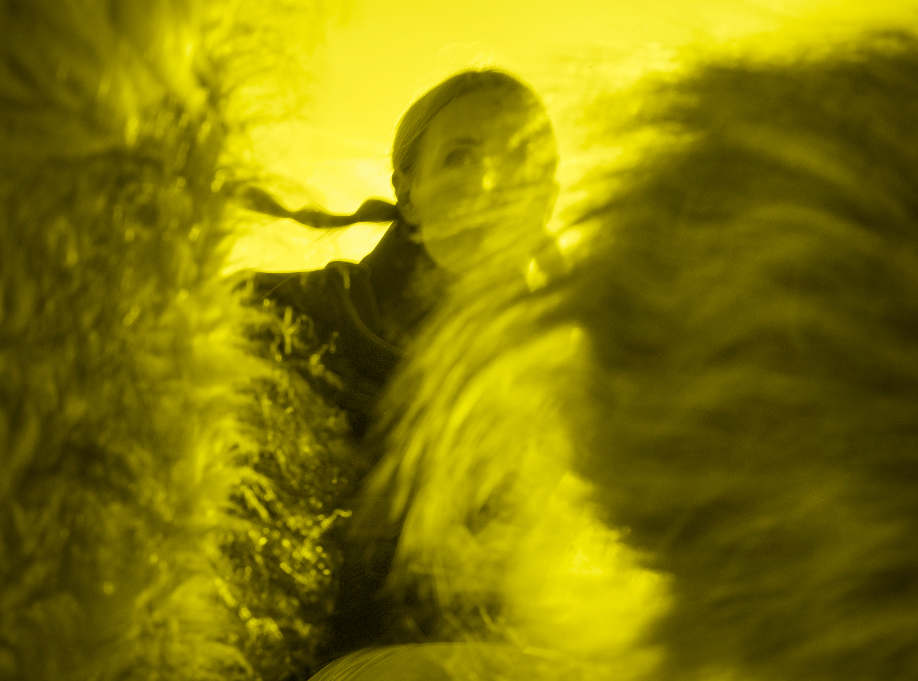
At the Finnish Pavilion, artist Jenna Sutela presents Aeolian Suite, curated by Stefanie Hessler. Rather than approaching the pavilion as a fixed national container, Sutela transforms it into an atmospheric instrument: a space shaped by wind, sound, meteorological data, movement and invisible forces.
This feels important.
In a moment when cultural institutions are pressured by the language of borders, conflict and opposition, Aeolian Suite invites us to listen to what passes through all borders: air, weather, vibration, breath, climate. The wind does not belong to one nation. It does not stop at a political line. It travels, carries, erodes, connects and unsettles.
Perhaps this is why the work feels so necessary today.
Not because it avoids politics, but because it reminds us of something deeper than politics: the fragile system that makes every human argument possible in the first place. The Earth. The atmosphere. The living conditions we share before we divide ourselves into identities, flags, ideologies and territories.
We live in a time of external conflicts, but also of internal ones. Collective fear becomes private anxiety. Political violence enters the body as tension, suspicion, exhaustion. We learn to defend, to react, to separate. We forget how to listen.
Sutela’s work seems to propose another rhythm. Not silence, not escape, but attention.
To listen to the wind is not a naive gesture. It is not a decorative return to nature. It is an act of humility. It means recognizing that the human voice is not the only voice in the room. It means accepting that intelligence may also exist in atmospheric patterns, organic movements, non-human systems and fragile ecological balances.
For Nordrom Kunst, this is where the Finnish Pavilion becomes more than a national presentation. It becomes a symbolic counterpoint to the geopolitical weight surrounding the Biennale. While the world argues through power, territory and representation, Aeolian Suite asks us to return to the primary condition of life: the shared air between us.
Maybe this is the question contemporary art should ask more often now.
Not only: who are we?
Not only: which side are we on?
But also: what are we doing to the world that holds us all?
In this sense, Aeolian Suite speaks directly to the urgencies that Nordrom Kunst seeks to follow: art as listening, art as ecological awareness, art as a way to reimagine our relationship with the Earth beyond possession and extraction.
The contemporary world is full of noise. Political noise, digital noise, institutional noise, emotional noise. But beneath that noise, the Earth is still speaking.
The question is whether we are still able to hear it.
More info: https://frame-finland.fi/en/pavilion-of-finland-aeolian-suite-jenna-sutela/
Image credits: Jenna Sutela, Aeolian Suite, 2026, work in progress. Pavilion of Finland at the 61st International Art Exhibition – La Biennale di Venezia. Image: Hertta Kiiski, courtesy of Frame Contemporary Art Finland.
 Nordrom Kunst
Lascia un commento