
Klara Kristalova, Benjamin Orlow and Tori Wrånes will transform the Nordic Countries Pavilion into a sculptural and mythical landscape for the 61st International Art Exhibition – La Biennale di Venezia.
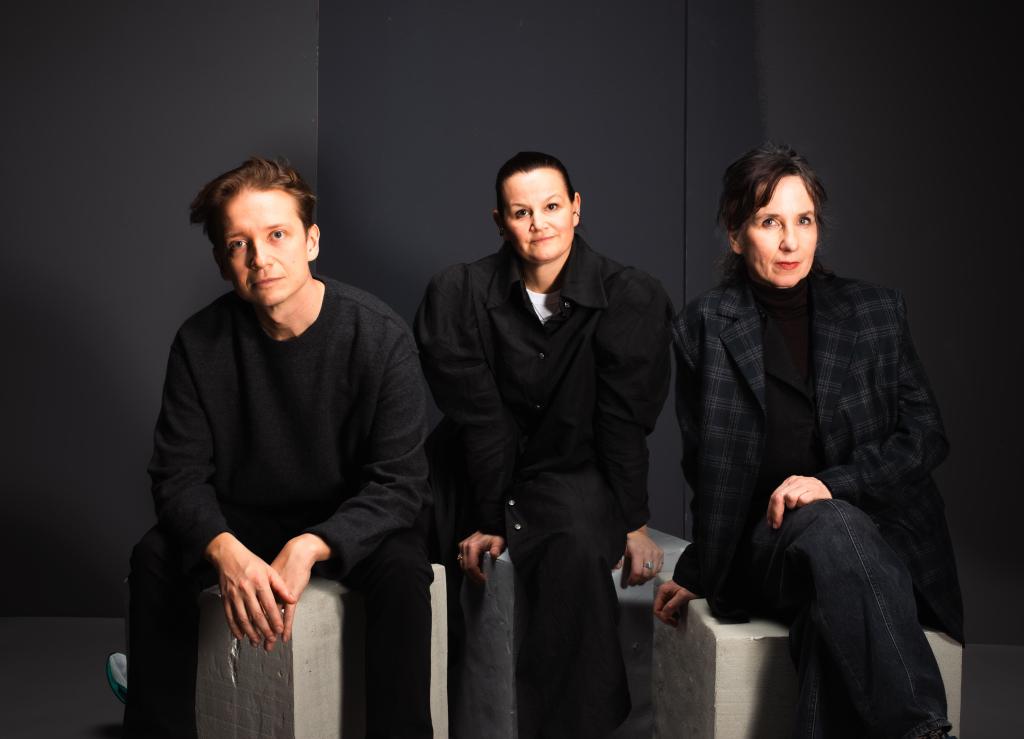
The Nordic Countries Pavilion has announced the first details and title of its exhibition for the 61st International Art Exhibition – La Biennale di Venezia. Titled How Many Angels Can Dance on the Head of a Pin?, the exhibition will bring together Klara Kristalova, Benjamin Orlow and Tori Wrånes in a collaborative project curated by Anna Mustonen, Chief Curator at the Museum of Contemporary Art Kiasma.
Presented from 9 May to 22 November 2026, the exhibition is commissioned by Kiasma and co-commissioned by Moderna Museet, Sweden, and OCA – Office for Contemporary Art Norway. Bringing together artists connected to Sweden, Finland and Norway, the Pavilion will become a shared Nordic environment where sculpture, performance, sound, myth and spatial intervention meet.
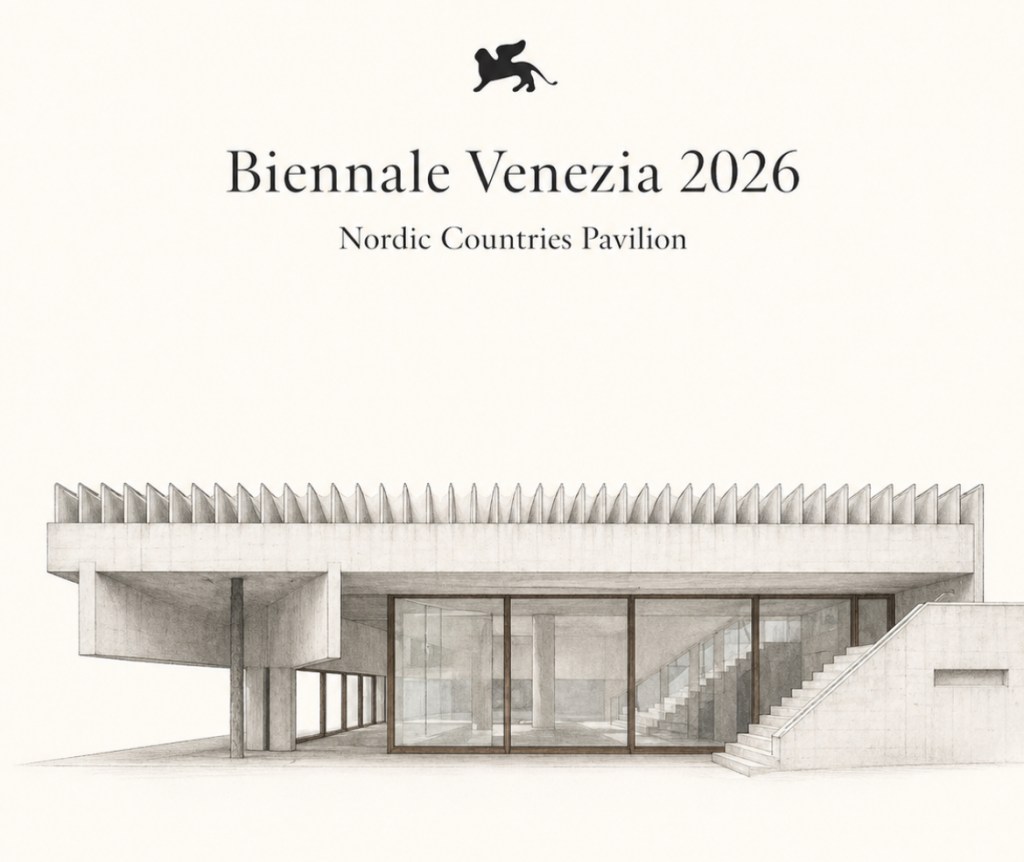
The exhibition will transform Sverre Fehn’s iconic 1962 Nordic Countries Pavilion into a sculptural and mythical landscape. Rather than presenting three isolated artistic positions, the project is conceived as an interconnected ecology: a space where bodies, materials, stories, architecture and nature enter into dialogue.
Inspired by Nordic folklore, fairytales and stories such as the Kalevala, the 19th-century creation epic of Finland and Karelia, the exhibition explores cycles of decay, renewal and transformation. Through hybrid forms that merge human, animal and plant-like presences, myth becomes a way to reflect on contemporary instability, environmental disconnection, borders, identity and coexistence.
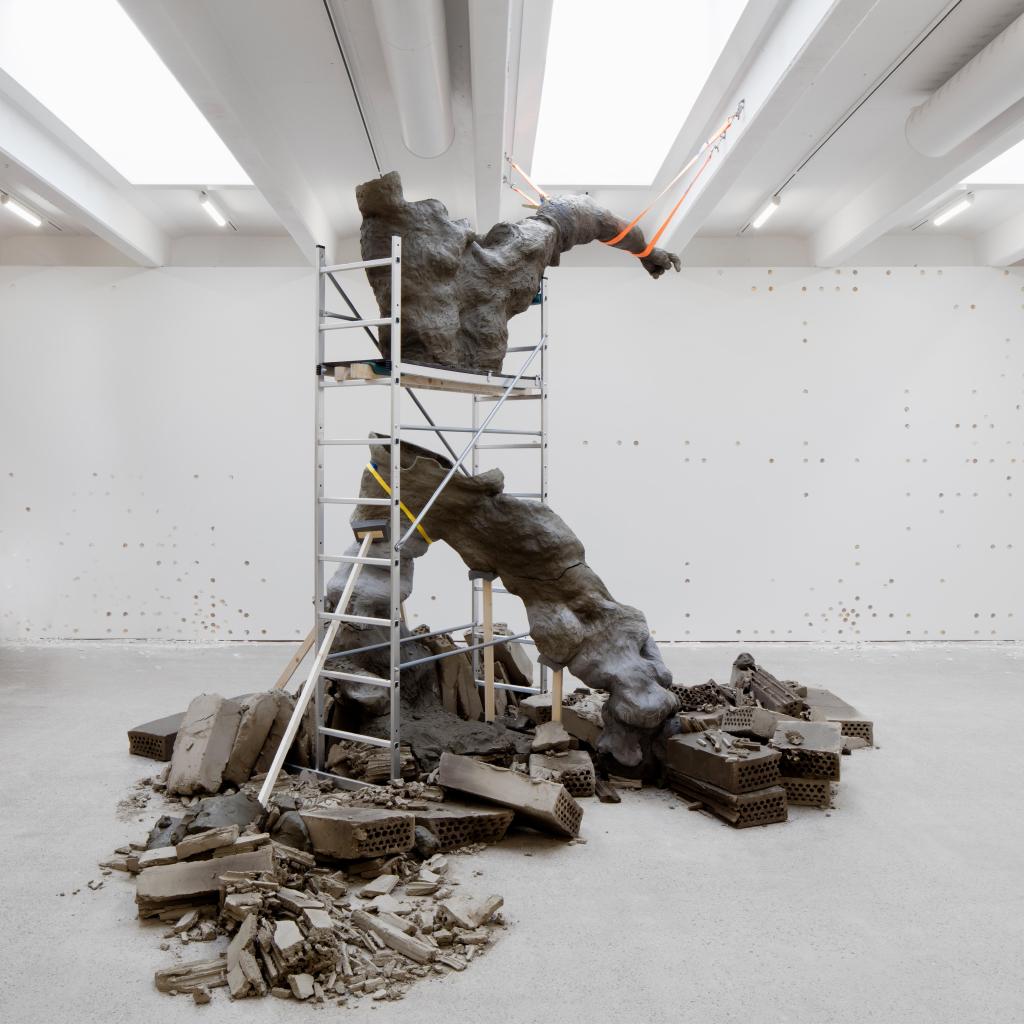
Benjamin Orlow’s practice brings a strong sculptural and material presence to the exhibition. Working across sculpture, video and installation, Orlow investigates how cultural narratives shape public and private spaces. His works often engage with historical transition, material culture and the built environment, giving physical form to transformation, solitude and cyclical change.
In this context, Orlow’s monumental sculptural language appears closely connected to the exhibition’s wider reflection on collapse, renewal and reconstruction. His work suggests that ruins are not only remains of the past, but also active sites where new forms, memories and meanings can emerge.
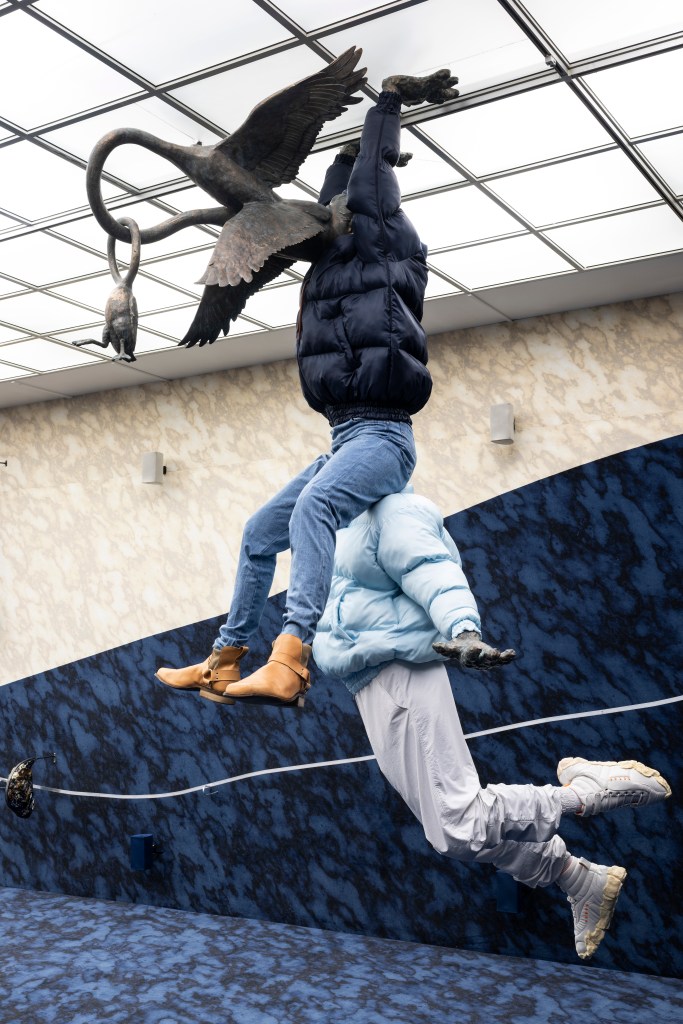
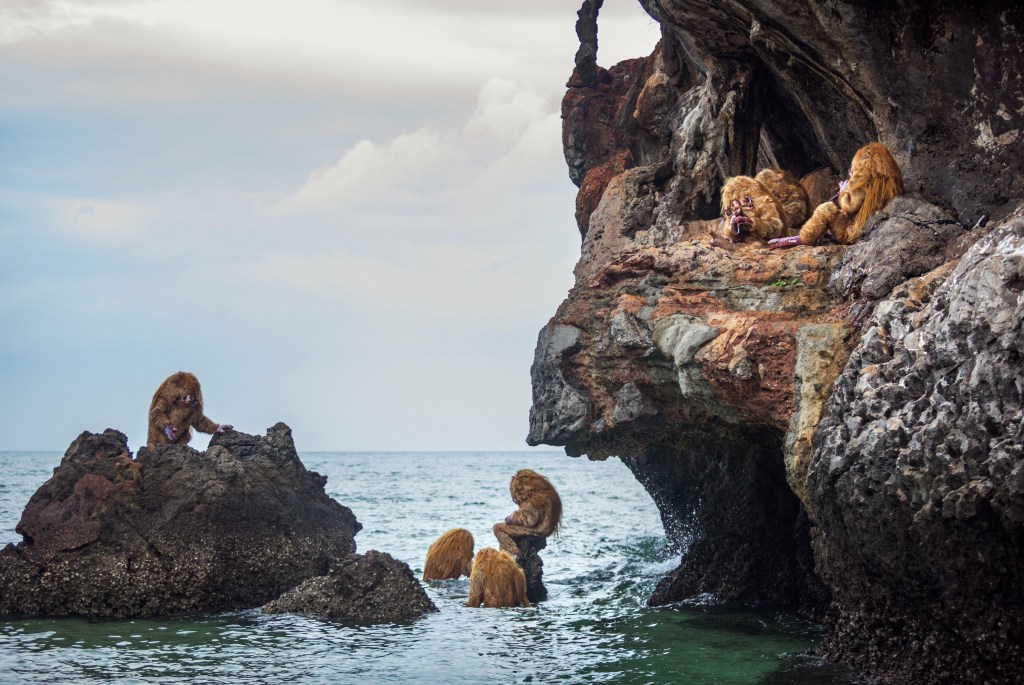
Tori Wrånes expands the Pavilion’s language through performance, sculpture, sound and space. Her practice constructs dreamlike and often otherworldly environments that challenge perception and alter the way space is experienced. In her work, the body becomes unstable, theatrical, hybrid and transformative.
Wrånes’ contribution feels especially resonant within the exhibition’s exploration of coexistence and embodied experience. Her work often moves between the absurd, the mythical and the deeply physical, opening spaces where human and non-human presences seem to merge. Through this approach, performance becomes not only an action, but a way of reimagining reality itself.
Klara Kristalova’s ceramic figures bring another essential layer to the exhibition. Her work combines fairytale imagery with the human body, animals, insects, flowers, trees and natural forms. Often marked by vulnerability, psychological tension and uncanny detail, Kristalova’s sculptures explore transitional states between innocence and unease, fragility and transformation.
Together, the three artists create a shared language in which myth is not treated as nostalgia, but as a living tool. Within the Pavilion, folklore and fairytale become ways to think about today’s world: a world shaped by ecological fragility, political tension, unstable identities and the urgent need to imagine forms of coexistence.
The title How Many Angels Can Dance on the Head of a Pin? refers to a famous philosophical question associated with the limits of thought, belief and coexistence. In the context of the Nordic Countries Pavilion, the question becomes spatial, political and poetic: how many bodies, stories, systems and ways of being can exist together within one shared environment?
The Pavilion itself plays a central role in this question. Sverre Fehn’s architecture, with its porous relationship to the surrounding landscape, becomes part of the exhibition rather than a neutral container. The project extends across interior and exterior spaces, activating the building as a living structure where art, architecture and nature intersect.
For Nordrom Kunst, this exhibition is particularly significant because it brings together several questions central to contemporary Nordic art today: the relationship between myth and ecology, the role of landscape, the instability of identity, and the possibility of imagining new forms of shared existence through art.
How Many Angels Can Dance on the Head of a Pin? positions the Nordic Countries Pavilion not simply as a national representation, but as a space of transformation. Through sculpture, performance, sound and myth, Kristalova, Orlow and Wrånes invite visitors to enter a world where boundaries are uncertain, bodies are mutable, and transformation becomes both an artistic process and a condition of life.
Image captions and credits:
- Benjamin Orlow, Tori Wrånes, Klara Kristalova. Photo: Finnish National Gallery / Pirje Mykkänen.
- Benjamin Orlow, Ritual City, 2023. Photo: Jussi Tiainen.
- Tori Wrånes, Moon Bag, 2025. Bergen Kunsthall. Photo: Thor Brødreskift. Courtesy the Artist. © Tori Wrånes.
- Tori Wrånes, NAAM YAI / BIG WATER, 2022, still from video. Photo: Kornkaew Nokkaew.
For more information about the Venice Biennale 2026: https://www.labiennale.org
Nordic Countries Pavilion, Venice Biennale 2026, Klara Kristalova, Benjamin Orlow, Tori Wrånes, Nordic Art, Contemporary Art, Kiasma, OCA Norway, Moderna Museet, Nordrom Kunst
 Nordrom Kunst
Lascia un commento