
Darya Kudari, Bubbles, Fragility and the Distance of War
A Nordrom Kunst feature with the Oslo- and Tromsø-based artist on multidisciplinary practice, global politics and her recent exhibition Bubbles.
Darya Kudari’s practice moves across drawing, painting, installation, photography, mural work and art education. Rather than defining herself through one specific medium, she approaches each project through the story, question or problem she wants to address.
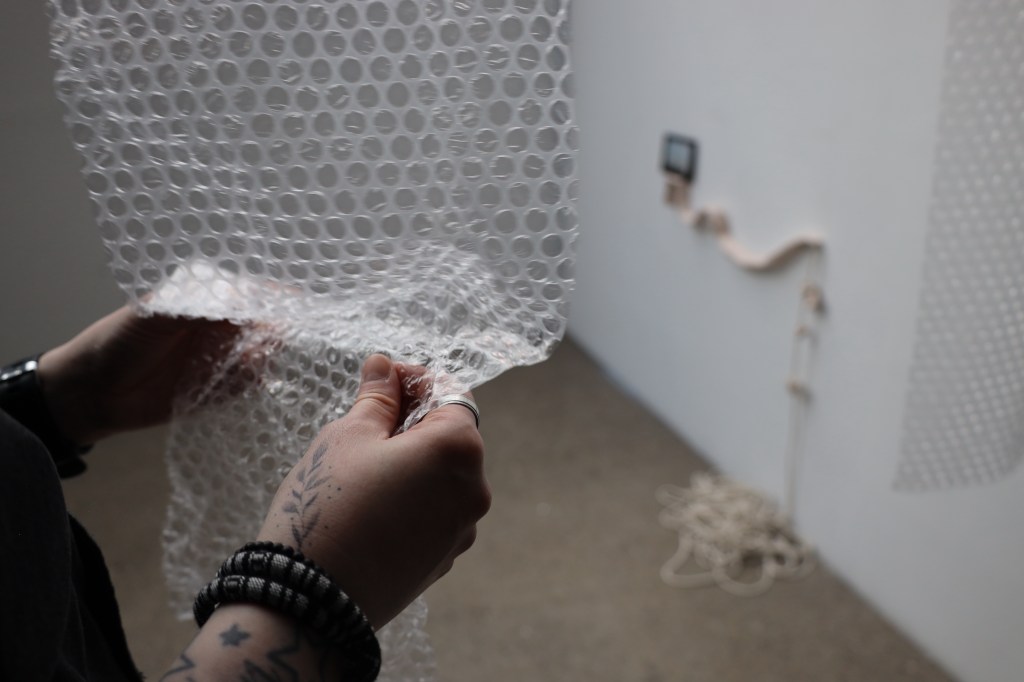
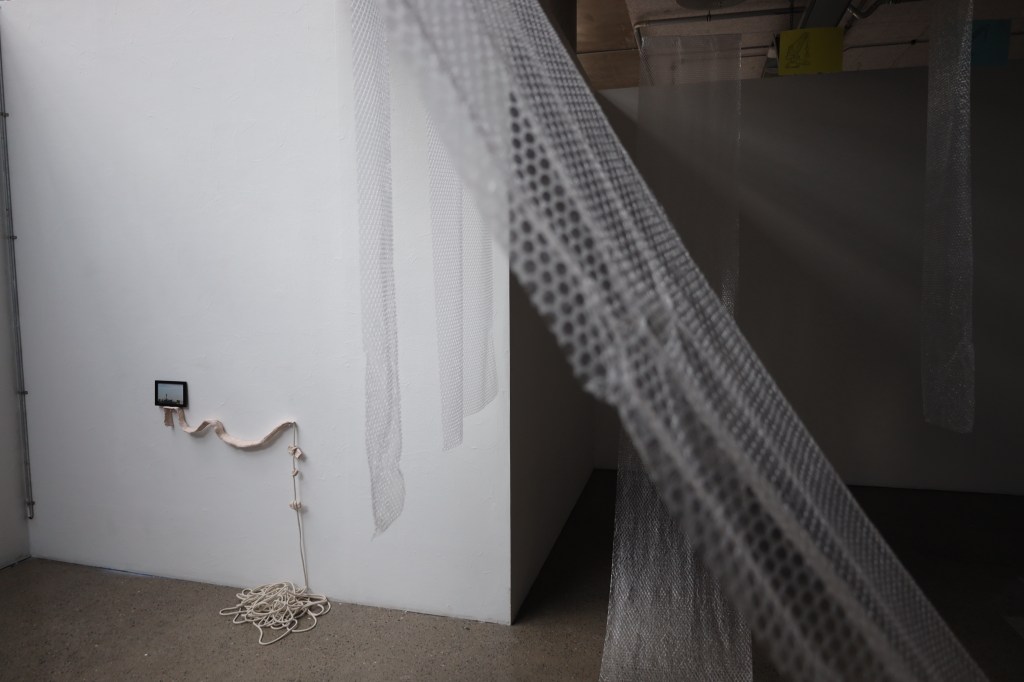
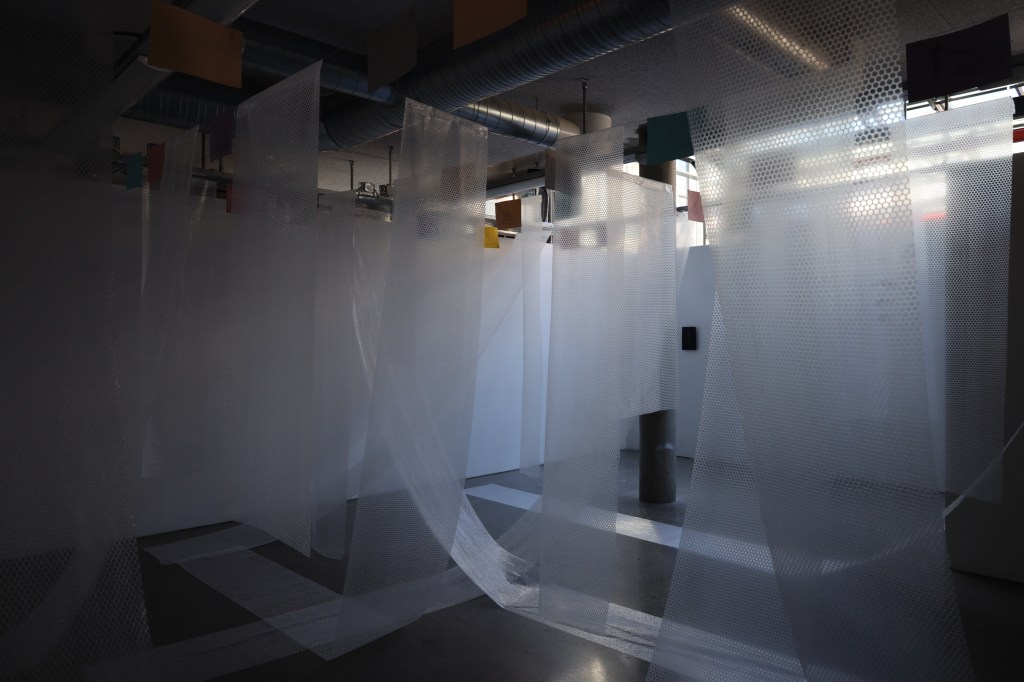
In the images shared with Nordrom Kunst, Kudari presents works from her latest exhibition, Bubbles. The title immediately suggests fragility: a bubble is light, transparent, unstable, almost impossible to hold. It exists for a moment, reflects the world around it, and can disappear without warning.
In Kudari’s work, this fragility becomes connected to a wider field of reflection. Her practice deals with social and political issues, especially global politics, war, human behaviour, children in conflict, public execution and the way violence can become distant, aestheticized or even romanticized through contemporary media.
Active between Oslo and Tromsø, Kudari is part of a young generation of artists working across personal memory, public space and global awareness. Her participation in Nordnorsken 2026, with the works Arctic Presence and Beginning After the End, places her practice within the wider artistic context of Northern Norway, while her recent exhibition Bubbles opens a more direct reflection on the way images, politics and human vulnerability circulate today.
For Nordrom Kunst, what makes her work interesting is this tension between visual lightness and difficult subject matter. The forms may appear fragile, playful or suspended, but behind them there is a deeper concern with how we look at the world, how we receive information, and how easily we can become emotionally distant from violence.
In a written exchange with Nordrom Kunst, Darya Kudari spoke about her multidisciplinary practice, her interest in global politics, and the questions that continue to shape her current work.
Nordrom Kunst:
Your work seems to move across different media, including photography, installation, drawing, painting and mural work. How would you describe your artistic practice at this stage of your development?
Darya Kudari:
I would describe my practice as multidisciplinary. I work from the story or the problem I want to address, and from there I imagine and plan which medium can best express it and what feels most organic to the storytelling.
Because I work with social and political issues, I would like the public to think after encountering the work. Sometimes this happens through painting, sometimes through installation. I do not have the answers to the issues I am interested in, but I would like to bring people together and encourage them to become part of the solution.
Nordrom Kunst:
We were particularly interested in Arctic Presence and Beginning After the End, which you presented in connection with Nordnorsken 2026. Could you tell us more about these works, and about the ideas, images or experiences that led you to create them?
Darya Kudari:
Our world has become smaller. We are all much closer to each other than we were one hundred years ago. Media and our phones allow us to know immediately what is happening in the world. We travel much more, meet many different people, and become aware of other people’s experiences.
Wars feel closer to us now, but at the same time we continue to live our lives in a nonchalant way. We are constantly updated and fully aware of global political situations, but this information comes through the same flat screen we use to watch comedy, binge-watch television series or look at cute puppies.
From my point of view, I think we are sometimes becoming immune to fully understanding how close war really is to us.
Nordrom Kunst:
Are you currently working on any new projects, exhibitions, research or future directions that you would like to share with Nordrom Kunst readers?
Darya Kudari:
My current work is still related to global politics, especially war in the Middle East. I grew up in Iran and lived there for sixteen years, so I feel partly Iranian.
I am working with installations about human behaviour, children in war, public execution, and also the way war is romanticized.
I have recently applied to various galleries and exhibitions for next year, so we will see where the future lies for my work.
Kudari’s answers reveal an artistic practice that is still developing, but already grounded in urgent questions. Her work does not try to offer simple solutions. Instead, it creates spaces where viewers are invited to pause, think and reconsider their own position in relation to images, violence and responsibility.
Bubbles can therefore be read not only as a visual or material form, but also as a metaphor for contemporary perception. We live inside fragile surfaces of information. We see everything, yet often feel very little. News, entertainment, tragedy and distraction arrive through the same screen, flattening distance and emotion at the same time.
Through installation, image and gesture, Darya Kudari opens a space for reflection on this condition. Her work asks what it means to remain sensitive in a world where violence is constantly visible, but also constantly absorbed into the ordinary rhythm of everyday life.
For Nordrom Kunst, her practice is relevant because it connects personal background, political awareness and artistic experimentation. Between Oslo and Tromsø, between drawing and installation, between fragility and conflict, Kudari’s work points toward a young artistic voice attentive to the unstable relationship between image, world and human response.
Her participation in Nordnorsken 2026 marks an important moment of visibility within the context of Northern Norway, while Bubbles offers another entry point into her current research: a fragile, suspended and politically aware body of work where softness and vulnerability become ways to speak about violence, distance and collective responsibility.
For a journal such as Nordrom Kunst, focused on contemporary artistic practices connected to Northern Norway, place, memory, materiality and emerging voices, Kudari represents a position to follow. Not because the work is already fixed, but because it remains open to transformation.
Image captions –
Darya Kudari, from the exhibition Bubbles. Photo courtesy of the artist.
Darya Kudari / Darya Kudari Art
Instagram: @darya.kudari.art
Selected for Nordnorsken 2026
Connected to KHiO and Einar Granum Kunstfagskole
Drawing workshops at the Vigeland Museum, Oslo
 Nordrom Kunst
Leave a comment