Artistic Research, Citizen Science and Ecological Restoration in Tromsø
Some exhibitions present finished works. Others invite visitors into an ongoing process of research, collaboration and discovery.
Presented at Small Projects in Tromsø, understory is an artistic research project by Jacqueline Kärcher, Florentine Schäfermeier and Martha Steinmetz that explores the restoration of kelp forests along the coast of Northern Norway through the intersection of contemporary art, citizen science and ecological practice.
Developed in collaboration with Rissa Citizen Science and Polar Film Lab, the exhibition combines analogue photography, digital film, sound and soft materials to investigate how environmental restoration can also become a way of thinking about relationships between people, marine ecosystems and different forms of knowledge. Rather than positioning scientific research and artistic practice as separate fields, understory proposes a shared space in which observation, participation and collective experience can intertwine. Within the exhibition, restoration process becomes more than scientific documentation.
The exhibition is hosted by Small Projects, an independent, non-profit artist-run space in central Tromsø. Founded by artist Jet Pascua in Manila in 2001 before continuing its activities in Tromsø from 2011 onwards, Small Projects has established itself as a platform for contemporary artistic practices, exhibitions, research and international collaboration. Throughout its programme, the space has consistently supported projects that encourage dialogue across disciplines and create opportunities for experimentation within the context of Northern Norway and the Arctic.
This makes Small Projects a particularly appropriate setting for understory. Rather than presenting a finished statement about environmental change, the exhibition reflects an ongoing investigation shaped by artists, researchers and local communities working together. The project developed through repeated encounters in Tromsø, where the three artists became connected not only through their own practices but also through a wider network that includes cultural organisations, citizen scientists and environmental initiatives.
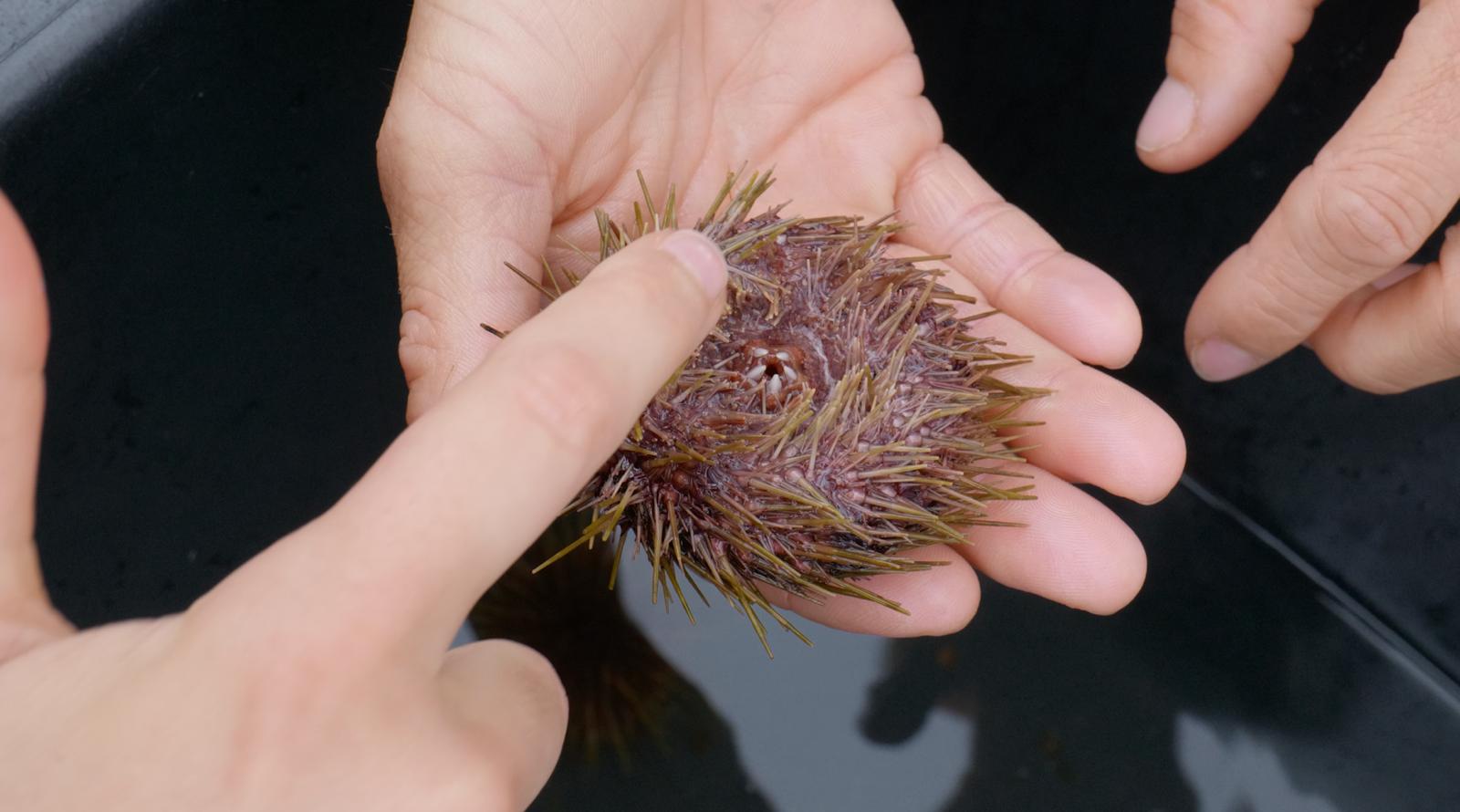
At the centre of understory is the work of Rissa Citizen Science, a Tromsø-based organisation that promotes public participation in environmental research and conservation. One of its best-known initiatives focuses on restoring kelp forests that have been damaged by the spread of sea urchins along the Norwegian coastline. Working alongside researchers and volunteers, participants contribute directly to ecological restoration while generating new forms of shared knowledge about marine environments.
Supported by Tvibit, Frifond, the Goethe-Institut and Culture Moves Europe, a programme funded by the European Union, understory reflects a growing interest in collaborative approaches that connect artistic research with environmental engagement and community participation.
To better understand how the project developed, Nordrom Kunst invited Florentine Schäfermeier, Jacqueline Kärcher and Martha Steinmetz to discuss the origins of their collaboration, the influence it has had on their individual artistic practices, and what they hope visitors will experience through the exhibition.

How did the collaboration develop?
For some time, each of us had been carrying the quiet desire to work together beyond the boundaries of academia. Gradually, this shared longing took root: a need to explore how artistic practice and locally embedded forms of science communication might meet. Collaboration, attentiveness and site-specific research became the ground from which our work could grow. Jacqueline’s relationship with Tromsø began in 2023 during her internship with artist Lawrence Malstaf. Through this experience, she became closely connected to Tromsø’s intimate network such as Polar Film Lab, Tromsø Kunstforening and the forming citizen science project Rissa. Across several stays in Tromsø, Jacqueline met Florentine and Martha, who had likewise become part of these closely connected communities. What began as conversations around common interests gradually unfolded into a deep friendship, grounded in mutual trust, curiosity and a shared sensitivity towards making and researching together. Rather than following a predetermined path, understory evolved through encounters, shared experiences and ongoing dialogue, growing into a collective artistic research practice that continues to unfold through the relationships it nurtures.
Did working together influence the way each of you thinks about your own artistic practice?
Florentine: Working together has expanded Florentine’s practice, opening up a more transdisciplinary approach to making. The collaboration invites her to move beyond the conventions of documentary film, embracing filmmaking as a form of artistic research where different forms of knowledge can meet. Rather than simply documenting existing realities, her practice has shifted towards cultivating situations in which knowledge can be experienced, questioned and shaped collectively, continuously exploring forms of multispecies storytelling while tracing connections and hopeful ways of engaging with Earth Kin.
Jacqueline: For Jacqueline, the collaboration has become a meaningful extension of her artistic practice. It has deepened her understanding of analogue photography, not only as a medium for representational storytelling, but as a way of sensing, relating and communicating with the world. Working collectively with Florentine and Martha has allowed her a shared visual language to emerge, one that moves fluidly across disciplines and creates space for different perspectives to coexist. This process has strengthened her confidence in her own artistic voice while revealing the possibilities and freedom of experimenting in analogue photography as part of a wider, collaborative context.
Martha: The collaboration has gently shifted Martha’s approach to research towards embodied forms of knowledge. While her previous work often began with theoretical frameworks, this project emerged through presence, through time spent outdoors, close observation and attentive listening. Field-based improvisation became a mode of inquiry in itself, revealing that knowledge can arise through care and shared experience as much as through analysis. This process has opened new ways of understanding research as something embodied and continually evolving.


After spending so much time researching and creating this project, what do you hope visitors will take away from the exhibition?
More than anything, we hope the exhibition inspires a sense of participation. We want to lower the threshold for becoming involved and to show that meaningful engagement with environmental questions does not belong exclusively to scientific or academic institutions. In Tromsø, we discovered a landscape where artists, researchers, citizen scientists and local initiatives overlap in generous and unexpected ways. By making these connections visible, we hope to encourage others to imagine themselves as part of similar networks of care.
At the heart of understory is the desire to make knowledge something that can be experienced rather than simply explained. Much of scientific communication depends on specialised language and established forms of expertise. Our collaboration asks what happens when knowledge is shared through images, sound, movement, conversation and collective experience instead. We believe that curiosity and fascination are powerful ways of learning – ones that do not require complete understanding in order to foster care. The project grows from our own encounters with this place and its communities and we hope that visitors leave not only with new insights, but with a renewed desire to observe closely, to participate and to care for the worlds they inhabit.
Exhibition Information
understory
An artistic research project by Jacqueline Kärcher, Florentine Schäfermeier and Martha Steinmetz
Opening: 6 August 2026, 19:00
Exhibition dates: 7–9 August 2026
Opening hours: 15:00–19:00
Small Projects
Grønnegata 23
9008 Tromsø, Norway
Developed in collaboration with RISSA Citizen Science and Polar Film Lab.
Supported by Tvibit, Frifond, the Goethe-Institut and Culture Moves Europe, a programme funded by the European Union.
About the Artists
Jacqueline Kärcher
Jacqueline Kärcher works with experimental analogue photography, combining site-specific research grounded in observation and dialogue, registering the physical and social texture of each place.
Florentine Schäfermeier
Florentine Schäfermeier is a filmmaker whose practice combines documentary, artistic research and multispecies storytelling, investigating the relationships between humans, landscapes and more-than-human worlds.
Martha Steinmetz
Martha Steinmetz’s practice bridges digital systems and material experience.
Together, their practices converge in understory, where artistic research becomes a shared process of observation, participation and environmental engagement.
About Small Projects

Founded by artist Jet Pascua in Manila in 2001 and continuing its activities in Tromsø since 2011, Small Projects is an independent, non-profit artist-run space dedicated to contemporary art, artistic research and international collaboration. Through exhibitions, publications, screenings and public programmes, it supports experimental practices that encourage dialogue across disciplines and communities.
Nordrom Kunst
Nordrom Kunst is an independent editorial platform dedicated to contemporary art and visual culture across the Scandinavian Arctic. Through interviews, exhibition features, essays and editorial projects, it documents artistic practices, cultural initiatives and the evolving creative landscape of Northern Norway, Northern Sweden, Northern Finland and Sápmi.
Photography: Cover image: Film still from a field shoot featuring volunteer divers restoring Tromsø’s kelp forest, photographed by Florentine Schäfermeier. All other images courtesy of the artists and Small Projects, unless otherwise stated.
© 2026 Nordrom Kunst. All rights reserved.